Disaster Roles Spotlight: What a Municipal Finance Director Should Know After a Disaster
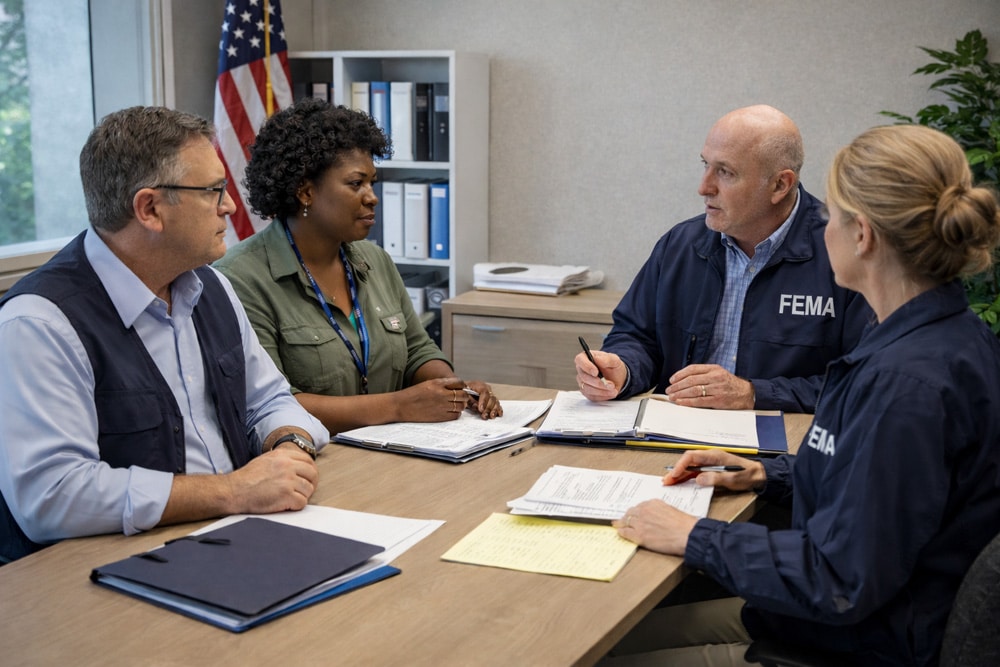
After a disaster, finance directors are often navigating chaos on two fronts at once. The pressure is intense professionally, while many are also dealing with personal impacts at home, with family, or in their own communities. In those moments, the goal is not to become a FEMA expert overnight. The goal is to keep the organization operating, protect public funds, and preserve eligibility for reimbursement long after the immediate crisis has passed.
At Berquist Recovery Consulting (BRC), our team has spent hundreds of hours working directly with municipal finance directors, school business managers, utility CFOs, non-profit leaders and public-sector finance teams during disaster recovery. Across hurricanes, floods, fires, and other emergencies, we see the same challenges arise again and again, often driven by early decisions made under extreme pressure.
This article provides a practical foundation for finance leaders, including what types of disaster-related work and costs are reimbursable under FEMA Public Assistance, how those costs should be documented to withstand review and audit, key compliance and procurement rules that frequently affect reimbursement, how to manage cash flow when costs are incurred long before reimbursements arrive, and when and how outside consultants may be used.
Understanding Reimbursable Work & Costs

From a finance perspective, FEMA Public Assistance is fundamentally a reimbursement program. First, a presidential disaster declaration must be declared for your county or parish following an event. That declaration will explain which categories of work are eligible as well as applicable timeframes.
Costs must be tied to eligible applicants, eligible work, eligible facilities, and reasonable, allowable expenses. Finance directors do not need to memorize every FEMA policy detail, but they do need to ensure that costs are captured in a way that clearly connects spending to an eligible purpose and an eligible scope of work.
Broadly, FEMA Public Assistance covers two major types of work.
Emergency work includes Category A Debris Removal, such as clearance, removal, reduction, and disposal of disaster-related debris, and Category B Emergency Protective Measures, including actions taken to eliminate or reduce immediate threats to life, public health, and safety.
Permanent work includes Categories C through G, covering the repair, restoration, or replacement of damaged facilities and infrastructure, such as roads, utilities, buildings, equipment, and parks.
Many reimbursement issues arise not because work was unnecessary, but because costs cannot later be clearly tied to the correct category, scope of work, eligible facility, or period of performance once FEMA reviews the project. Early coordination between finance, operations, and any outside recovery consultants is critical to avoid misclassification that can be difficult to unwind later.
Note that FEMA funds cannot provide a duplication of benefits, meaning insurance funding applies first and FEMA may then help fill in the gaps or overages.
Documentation: The Minimum Standard that Protects Reimbursement
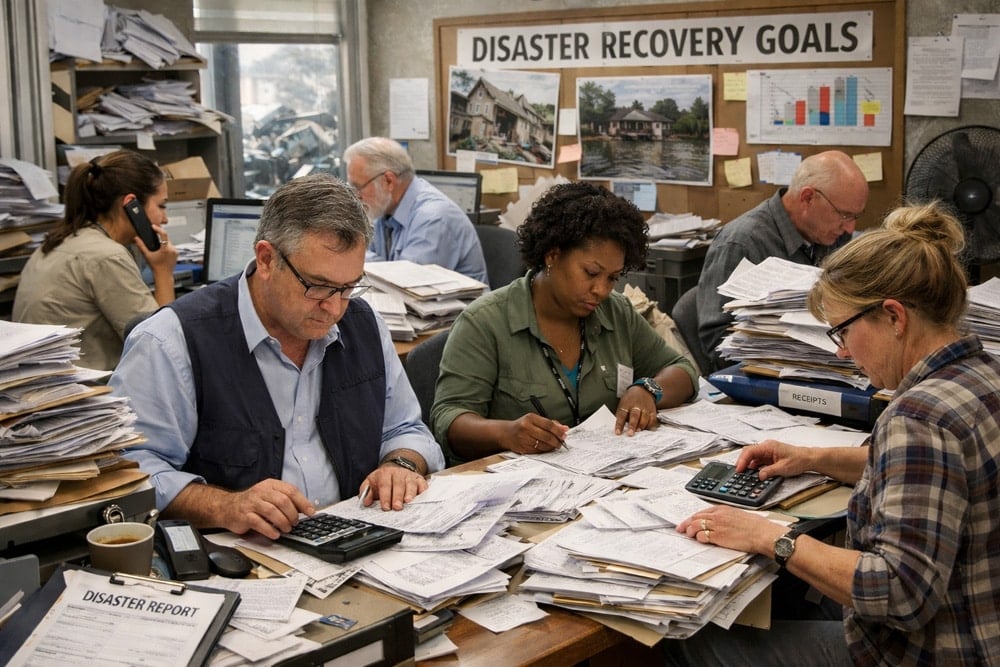
Documentation should be organized, complete, created at the time the work is performed, and defensible. Finance teams play a central role in setting and enforcing a minimum documentation standard across departments
At a minimum, organizations should capture clear descriptions of what work was performed, where, and why; labor records showing who worked, when, and on what eligible task; equipment usage logs that align with labor and specific activities; invoices, procurement records, contracts, and proof of payment for purchased services and materials; and centralized document storage with consistent naming conventions.
A simple rule of thumb applies: if someone unfamiliar with the disaster cannot understand why a cost was necessary and eligible by reviewing the documentation, FEMA is unlikely to reimburse it. I once audited costs for a disaster that happened more than a decade prior. When questions arose about a certain transaction, the applicant had to spend hours digging as the person responsible at the time had subsequently retired and then died. It’s best to keep thorough, organized records.
Procurement Compliance Still Applies, Even in Emergencies
Procurement is one of the most common sources of FEMA funding reductions, de-obligations, and appeals. While emergency conditions allow for limited flexibility, federal procurement requirements still apply, and FEMA will expect to see clear justification and complete procurement files. Entities should have an emergency procurement policy in place prior to disasters.
Finance directors should ensure that procurement methods are documented and justified, emergency or noncompetitive procurements are limited in scope and duration, contracts include appropriate cost controls and oversight, and procurement records are retained alongside financial documentation
Pre-positioned contracts that were competitively procured before a disaster often provide the cleanest path to both rapid response and FEMA reimbursement.
Cash Flow: Bridging the Gap Between Spending and Reimbursement
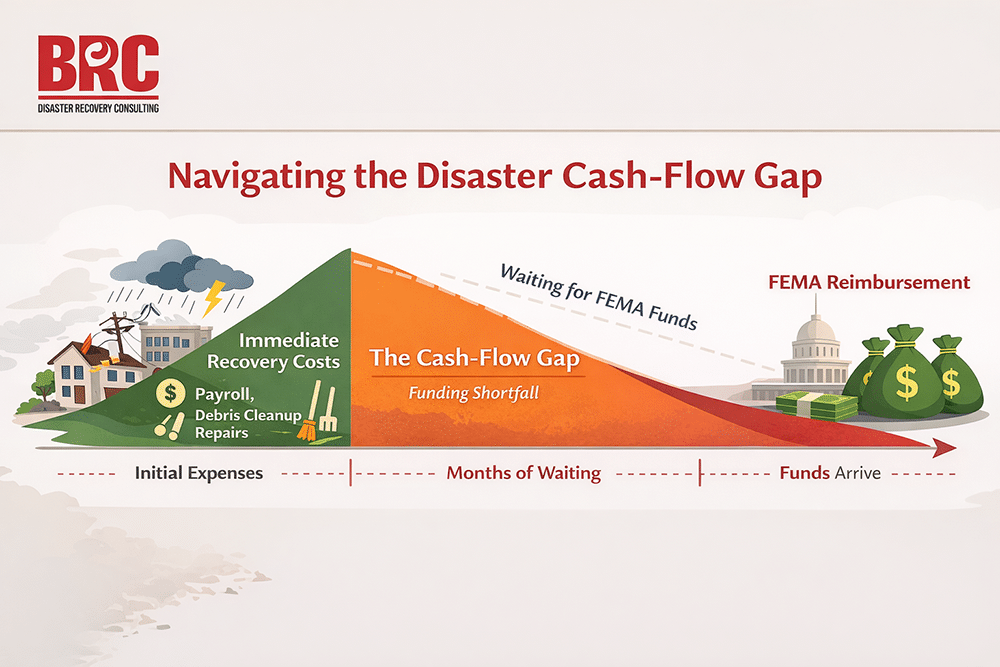
Even well-managed FEMA projects take time. This is especially true for permanent work. FEMA pays for permanent repairs on a reimbursement basis, meaning the public entity must first incur the costs, pay contractors and vendors, and then submit documentation to FEMA for reimbursement. For large capital repair projects, this can represent a substantial financial burden.
As a result, finance directors are often managing months or years of cash-flow exposure while projects are designed, constructed, reviewed, and ultimately reimbursed. This timing gap is one of the most common reasons organizations explore outside funding options during recovery.
Options may include FEMA Community Disaster Loans, insurance proceeds, state-level assistance or advances, internal cash management strategies, or short-term borrowing structured around expected reimbursements. It is important to note that Community Disaster Loans are intended to support essential governmental operations and revenue shortfalls; they are not designed to fund capital repairs or permanent facility improvements.
In certain limited and eligible circumstances, borrowing costs associated with short-term financing used to bridge FEMA reimbursement delays may themselves be reimbursable, provided they are properly documented, reasonable, and compliant with FEMA and federal requirements. These determinations are highly fact-specific and should be evaluated carefully before financing is put in place.
Using Consultants and Eligibility of Those Costs
Many public entities hire disaster recovery or FEMA consultants to assist with documentation, project development, compliance, or appeals. In many cases, consultant costs related to eligible Public Assistance work may be reimbursable, provided they are reasonable, properly procured, and directly tied to eligible activities.
Because consultant costs can be eligible, how those services are procured and scoped matters. Poorly structured contracts or inadequate procurement documentation can jeopardize reimbursement and create additional risk for the organization.
See our guide on how to avoid hiring the wrong FEMA consultant here.
Quick Reference: First-week Finance Priorities After a Disaster
For finance directors looking for a simple starting point, the first week should focus on a few core actions:
– Set up disaster-specific cost codes immediately
– Require task-level descriptions for all labor, equipment, and purchases
– Centralize disaster documentation and enforce naming conventions
– Lock procurement procedures, even if temporarily simplified
– Confirm cash availability for the next 30–60 days
– Pause before signing consulting contracts without procurement revie
These steps alone can significantly reduce reimbursement risk later.
Conclusion
Disaster recovery is as much a financial discipline as it is an operational one. Municipal finance directors, school business officials, and public-sector finance leaders play a central role in protecting public funds, maintaining essential services, and ensuring that eligible costs are ultimately reimbursed. With the right processes in place early, organizations can navigate recovery without compounding the financial impact of the disaster itself.
If your organization needs assistance interpreting FEMA Public Assistance requirements, strengthening documentation and compliance, evaluating consultant support, or planning for the financial realities of recovery, Berquist Recovery Consulting works alongside public-sector finance teams throughout every phase of disaster recovery.
Disclaimer: This article is intended for general informational purposes only and reflects practical experience working with public-sector finance teams and disaster recovery consultants. It does not constitute legal, accounting, financial, or regulatory advice. FEMA policies, eligibility determinations, and reimbursement outcomes vary by incident and jurisdiction. Finance directors should consult with their legal counsel, auditors, financial advisors, and recovery consultants regarding their specific circumstances.