
State-Wide Post-Disaster Mitigation Funding
Under Section 404 of the Stafford Act, FEMA’s Hazard Mitigation Grant Program (HMGP) provides competitive post-disaster mitigation funding to state, local, tribal, and territorial governments following a Presidential disaster declaration. Unlike FEMA Section 406 mitigation, which is tied directly to repairing disaster-damaged facilities under the Public Assistance program, Section 404 HMGP funding is awarded competitively at the state level and supports larger, forward-looking mitigation projects intended to reduce future risk. For Section 404 mitigation funding, the specific project site is not required to have sustained direct damage during a disaster.
This distinction is important. Section 406 funding is generally limited to strengthening facilities that were damaged during the declared event, while Section 404 Mitigation can fund broader mitigation initiatives that address known hazards, infrastructure vulnerabilities, and long-term resilience priorities—even if the specific asset was not damaged. For many communities, utilities, schools, hospitals, and infrastructure operators, FEMA HMGP creates an opportunity to address larger systemwide risks that fall outside the scope of immediate disaster repairs.
Berquist Recovery Consulting helps municipalities, utilities, schools, hospitals, and infrastructure operators identify, develop, and pursue FEMA Section 404 Mitigation funding to reduce long-term risk and improve resilience.
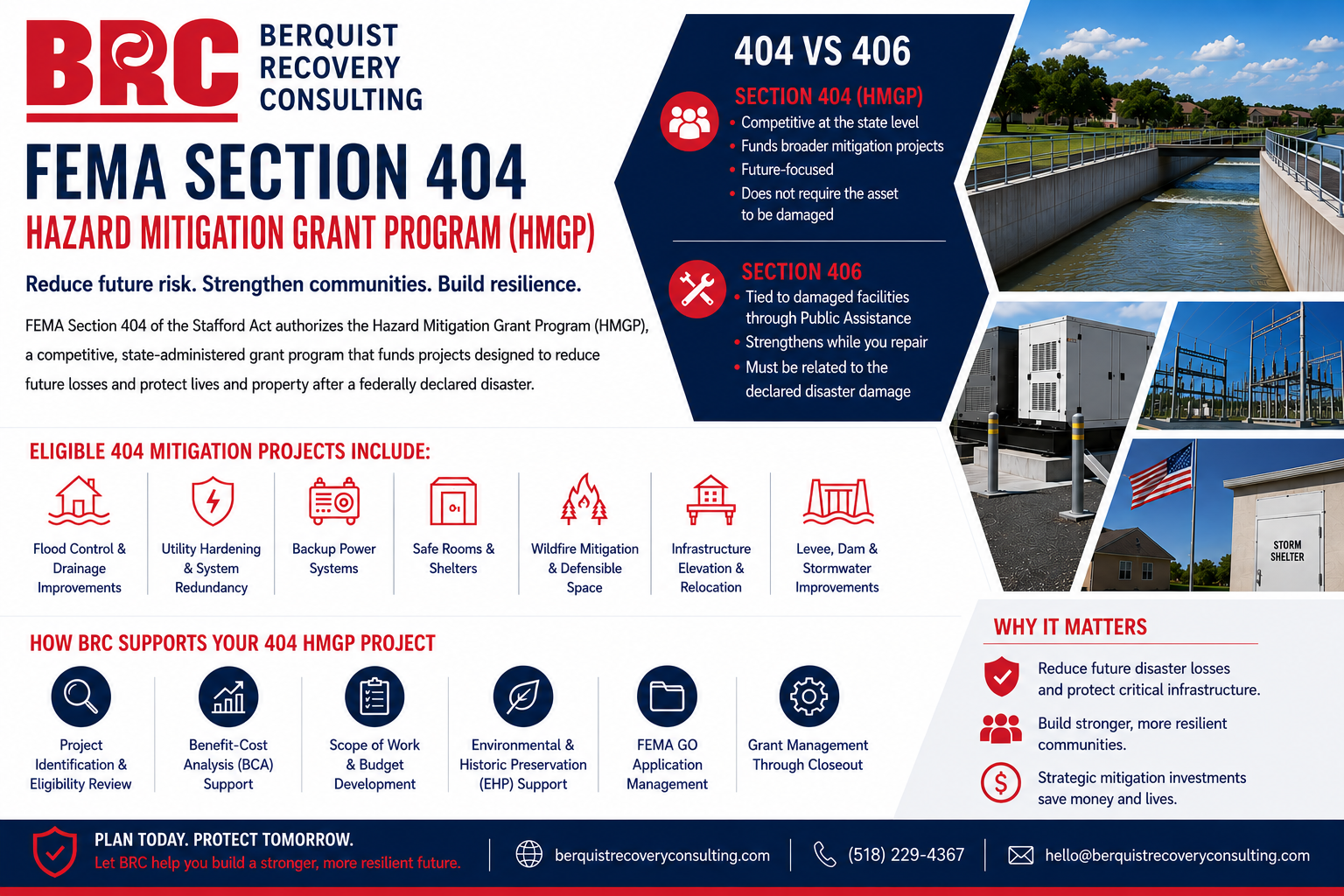
What is FEMA Section 404 Hazard Mitigation?
Section 404 of the Stafford Act authorizes FEMA’s Hazard Mitigation Grant Program, one of the federal government’s primary tools for reducing disaster risk after a federally declared event. The program is designed to help communities invest in projects that reduce future damages, protect critical infrastructure, and improve operational resilience.
Because FEMA HMGP funding is awarded competitively by each state, applicants must build strong, well-documented projects that clearly demonstrate long-term value, risk reduction, and cost effectiveness.
For many applicants, this means identifying projects that not only solve an immediate problem but also align with broader hazard mitigation priorities.
Common FEMA 404 HMGP Mitigation Projects
FEMA Section 404 funding can support a wide range of hazard mitigation activities, including:
- Flood control improvements
- Stormwater and drainage system upgrades
- Utility hardening and redundancy
- Backup power systems
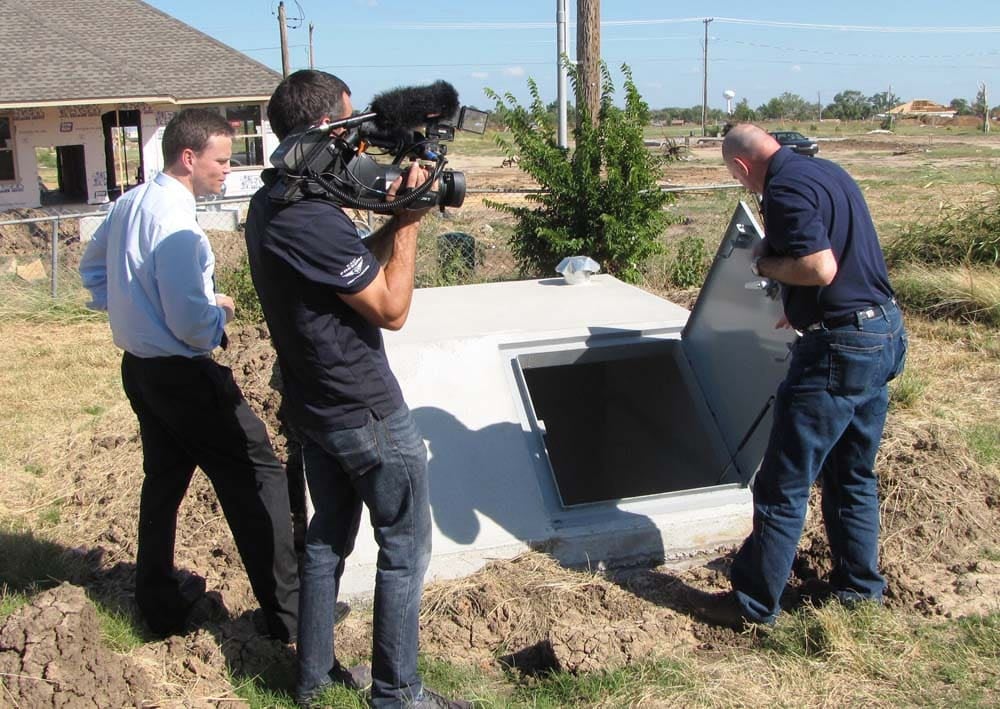
- Safe rooms and tornado shelters
- Wildfire mitigation and defensible space
- Slope stabilization
- Infrastructure relocation
- Floodproofing critical facilities
- Seismic retrofits
- Levee and dam improvements
- Water and wastewater infrastructure resilience
These projects are intended to reduce future damage, improve continuity of operations, and lower the long-term cost of recovery.
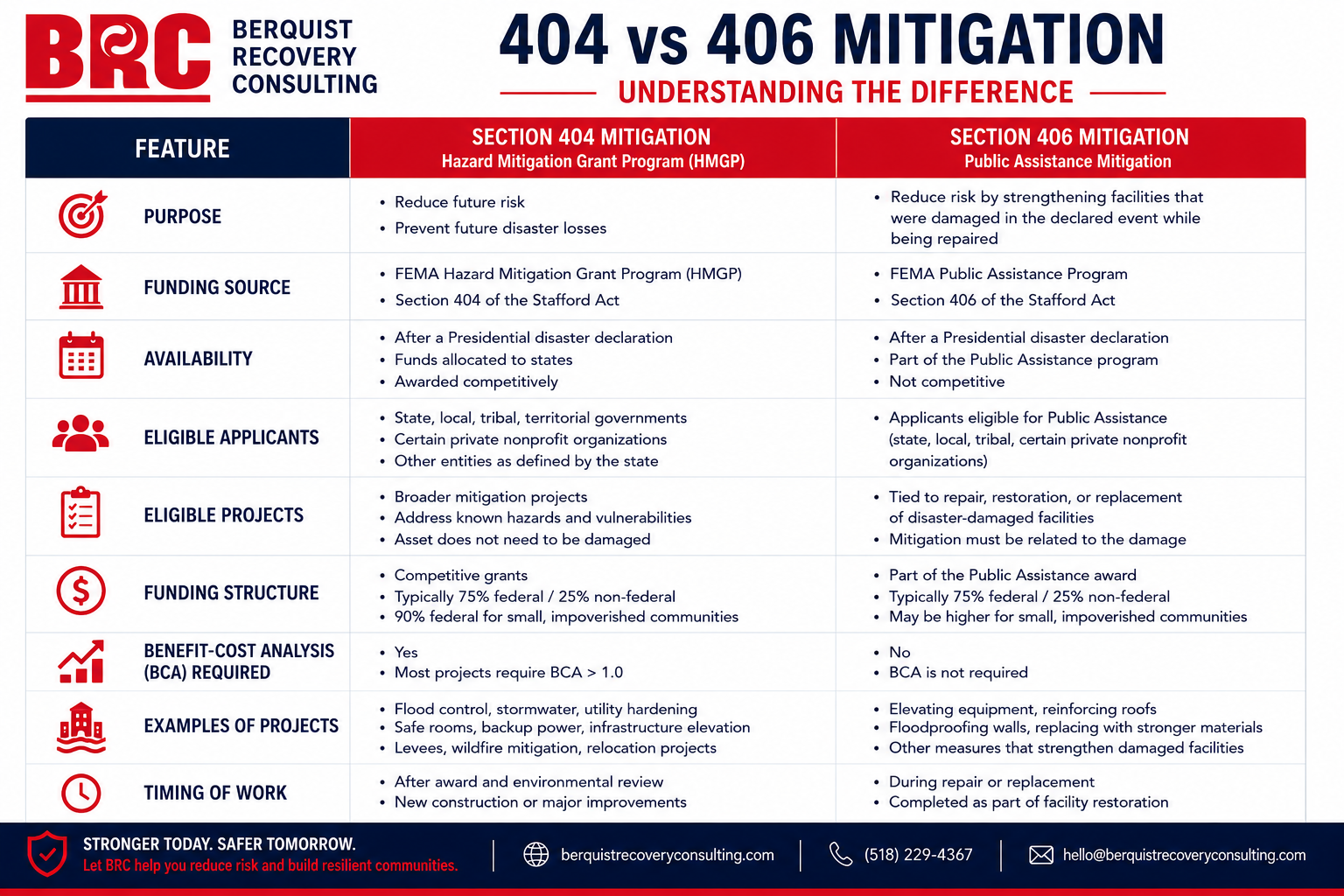
FEMA Section 404 vs. Section 406 Mitigation
Understanding the difference between FEMA Sections 404 and 406 is an important part of post-disaster planning.
Section 406 mitigation is tied to the repair of damaged facilities under FEMA Public Assistance. It allows applicants to incorporate resilience improvements during the rebuild process. For example, elevating electrical equipment during repairs or hardening a roof after storm damage may qualify under Section 406.
Section 404 mitigation is broader. It can fund larger, strategic projects that address systemwide vulnerabilities, whether or not the specific infrastructure was damaged during the declared event.
For example:
- A damaged pump station may receive floodproofing improvements under Section 406.
- A larger floodwall protecting an entire wastewater treatment plant may be better suited for Section 404 HMGP.
In many cases, the strongest recovery strategy involves evaluating both programs together.
Who Can Apply for FEMA Section 404 HMGP Funding?
Section 404 funding is administered through the state and generally becomes available following a federal disaster declaration.
Eligible applicants may include:
- Counties
- Cities and municipalities
- Utility authorities
- Public power districts
- School districts
- Hospitals
- Water and wastewater agencies
- Special districts
- Certain nonprofit organizations
Because state priorities and application requirements can vary, understanding the local process is critical.
How Berquist Recovery Consulting Supports FEMA HMGP Applications
Successful FEMA mitigation applications require technical planning, financial analysis, and compliance documentation. Our team helps clients navigate every stage of the process.
Mitigation Project Identification
We work with clients to identify eligible mitigation opportunities based on known hazards, operational vulnerabilities, and disaster history.
Benefit-Cost Analysis (BCA) Support
Most FEMA Section 404 projects require a positive Benefit-Cost Analysis. We assist in developing FEMA-compliant BCA documentation to support project viability.
Scope of Work Development
We help develop complete and defensible project scopes in coordination with engineering teams, operators, and stakeholders.
Budget Development and Cost Share Planning
Our team assists with project budgeting, cost estimating, and cost-share strategy development.
Environmental and Historic Preservation (EHP) Support
Many mitigation projects require environmental review. We help prepare supporting documentation and identify potential issues early in the process.
FEMA GO Application Support
From application setup to final submission, we help manage FEMA GO entries, supporting documents, and responses to Requests for Information.
Post-Award Grant Management
Awarded projects require ongoing compliance, procurement support, reimbursement documentation, and closeout management. We remain involved throughout implementation.
Why FEMA Section 404 Matters
Hazard mitigation funding gives communities the ability to address known vulnerabilities before they become repeat losses. Whether the risk is flooding, wildfire, severe storms, or infrastructure failure, proactive mitigation can reduce operational disruptions, protect public safety, and improve long-term financial outcomes.
For utilities, municipalities, schools, and healthcare systems, Section 404 funding often supports projects that would otherwise be difficult to finance through local budgets alone.
Frequently Asked Questions About FEMA Section 404 HMGP Funding
What is FEMA Section 404 funding?
FEMA Section 404 funding refers to the Hazard Mitigation Grant Program, commonly called HMGP. It provides post-disaster funding for projects that reduce future disaster risk and long-term losses.
What is the difference between FEMA 404 and FEMA 406 mitigation?
FEMA Section 404 mitigation funds broader competitive mitigation projects through HMGP. FEMA Section 406 mitigation is tied to the repair of damaged facilities under the Public Assistance program and is used to strengthen those facilities during repair or replacement.
Is FEMA Section 404 funding competitive?
Yes. FEMA Section 404 Mitigation funding is generally administered through the state and awarded competitively based on eligibility, state priorities, cost effectiveness, and project readiness.
Does a facility need to be damaged to qualify for Section 404 funding?
Not necessarily. Unlike Section 406 mitigation, Section 404 mitigation funding can support projects that address broader hazards and vulnerabilities, even if the specific facility was not damaged during the declared event.
Who is eligible for FEMA HMGP funding?
Eligible applicants may include local governments, counties, municipalities, utilities, school districts, hospitals, special districts, tribal governments, and certain private nonprofit organizations.
Does FEMA Section 404 require a Benefit-Cost Analysis?
Many FEMA Section 404 mitigation projects require a Benefit-Cost Analysis to demonstrate that the project is cost effective. BRC helps clients develop the documentation needed to support FEMA HMGP applications.
Work With an Experienced FEMA Mitigation Consultant
Berquist Recovery Consulting brings extensive experience in FEMA disaster recovery, mitigation strategy, and grant management. We understand how Section 404 mitigation funding fits into larger recovery efforts and how to build projects that align with FEMA and state priorities.
If your organization is evaluating post-disaster mitigation opportunities, our team can help determine whether FEMA Section 404 HMGP funding is the right fit. We can help prepare your application to lessen the administrative burden and increase your odds of grant funding selection.