What Municipalities Should Be Doing Now to Prepare for Hurricane Season
This blog post will share tips and insights to better prepare for the current hurricane season with lessons from hurricanes past. Our team has been helping entities prepare and recover for disasters for over 20 years. In the words of Ben Franklin, “an ounce of prevention is worth a pound of cure.”
We’re approaching the heart of hurricane season — and for local governments, that means it’s time to shift from general preparedness to targeted action. While hurricane season officially spans from June through October, September is historically the most active month, and now is the window to make sure everything is in place.
At Berquist Recovery Consulting, we’ve worked with municipalities large and small to recover from some of the most destructive storms in recent history. The difference between chaos and a coordinated response often comes down to how well a community prepares in advance.
1. Update & Adopt Key Plans
Having current, adopted plans on file is essential for both response coordination and FEMA reimbursement. At a minimum, review the following:
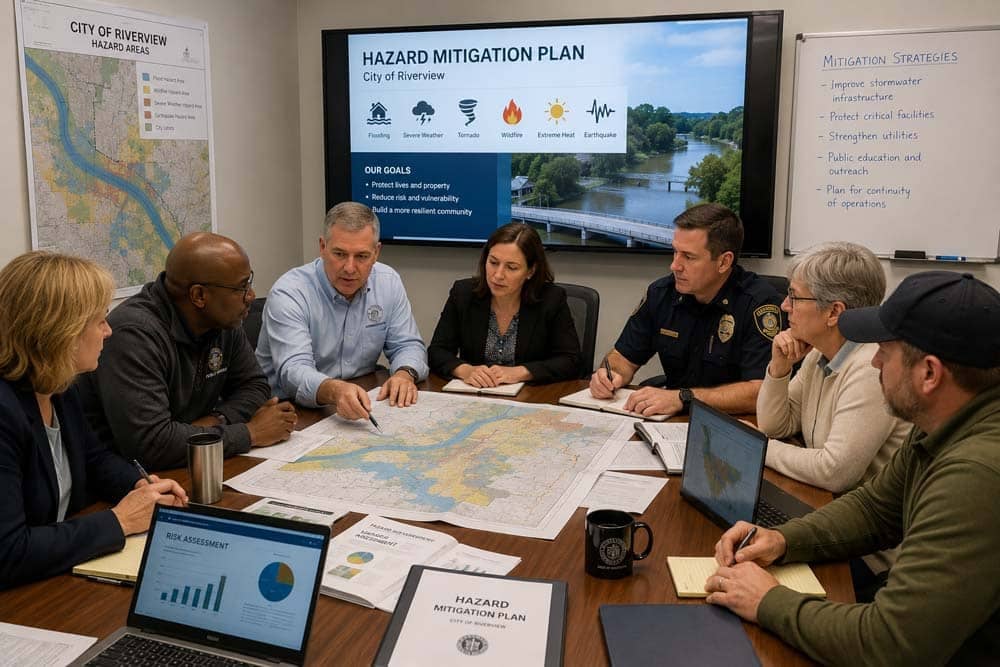
Hazard Mitigation Plan (HMP): FEMA must approve your Hazard Mitigation Plan in order for your jurisdiction to remain eligible for key funding sources like the Hazard Mitigation Grant Program (HMGP) and BRIC. These plans must be reviewed and reapproved every five years.
Debris Management Plan (DMP): FEMA does not require pre-approval of your DMP for debris removal reimbursement. However, having a FEMA-reviewed and approved DMP on file can make you eligible for additional reimbursement (up to 2%) and help expedite operations post-disaster. The plan should include pre-identified sites, estimated debris quantities, and procurement strategies that meet FEMA guidelines.
Comprehensive Emergency Management Plan (CEMP): Make sure this plan is current and reflects updated resources, shelter strategies, vulnerable populations, and communication protocols.
2. Test Emergency Alerts & Comminication Channels
Confirm that mass notification systems and public alert platforms are functioning and up to date.
Conduct a drill to test emergency messaging and coordination between agencies.
3. Review Procurement Policies
Your ability to respond effectively — and be reimbursed — depends on compliance with procurement rules. Ensure your policies allow for:
Emergency procurement under disaster conditions
Proper documentation and competition, even in urgent circumstances
4. Establish or Update Accounting Procedures for Disasters
Clear, event-specific accounting is one of the biggest pain points in disaster recovery. Before a storm hits, put systems in place to:
Track disaster-related costs separately from regular operations
Document time, materials, equipment, and contracts with FEMA in mind
5. Pre-Negotiate Standby Contracts
Don’t wait until the storm passes to find help. Municipalities should have standby contracts in place with:
Debris removal companies
Emergency construction firms
Specialized vendors like fuel providers or shelter operators
Disaster recovery consultants
These contracts allow you to mobilize quickly while staying compliant with procurement rules. FEMA encourages pre-event contracting and may provide increased reimbursement if you have properly procured, competitively awarded standby contracts in place before the event.
6. Retain a Disaster Recovery Consultant
A good disaster recovery consultant isn’t just there after the storm. They help with:
Readiness planning
FEMA policy compliance
Real-time documentation support
Maximizing reimbursement and reducing delays
Engaging a consultant through a pre-positioned standby contract ensures they’re ready to step in immediately when the situation demands it — without delays or emergency procurement headaches. Consultants who understand both the policy and on-the-ground realities of disaster recovery can be one of your most valuable partners during response and recovery.
Final Thoughts
Disasters are inherently unpredictable — but your response doesn’t have to be. Taking the time to prepare now not only protects your community, it positions your municipality to recover faster and more completely if a storm strikes. If you’re unsure where to begin, Berquist Recovery Consulting can help you craft and review your plans and be ready when it matters most.
We’re here to help you prepare and respond with confidence — before, during, and after the storm.