How to Prepare for the Next FEMA BRIC Funding Opportunity: 3 Tips to Get Started
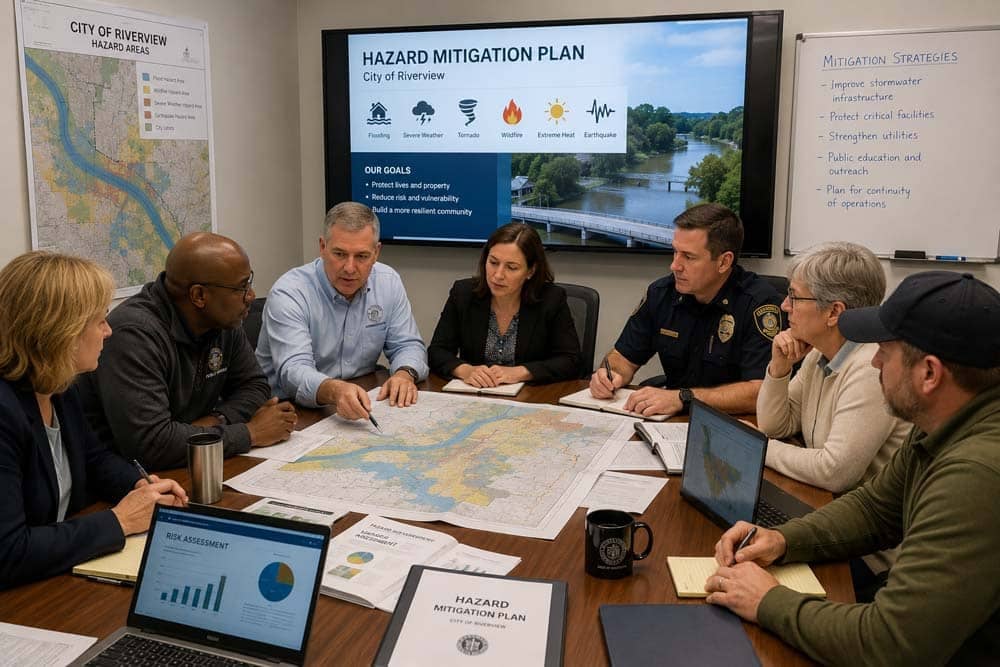
Communities across the United States face growing risks from flooding, hurricanes, tornadoes, severe storms, wildfires, drought, extreme heat, and other natural hazards. While disasters cannot be prevented, investments in resilient infrastructure can significantly reduce their impact by protecting lives, reducing damage to critical facilities, and lowering long-term recovery costs.
FEMA’s Building Resilient Infrastructure and Communities (BRIC) program was created to help communities make these investments before disasters occur. Rather than funding repairs after an event, BRIC supports projects that reduce future risk and strengthen infrastructure for years to come.
At Berquist Recovery Consulting (BRC), we have helped public agencies develop BRIC applications for projects involving public water and wastewater systems, public power authorities, solid waste facilities, and local governments. One lesson has remained consistent: organizations that begin preparing before a funding opportunity opens are often better positioned when application periods arrive.
Maintaining a current Hazard Mitigation Plan, adopting modern building codes, and identifying viable mitigation projects from an engineering perspective are all best practices that strengthen long-term resilience, support capital planning, and position communities for a variety of future state and federal funding opportunities.
What is the BRIC Program?
The Building Resilient Infrastructure and Communities (BRIC) program is a FEMA national grant program for pre-disaster mitigation and a cornerstone for proactive resilience funding. When evaluating large-scale options for infrastructure resilience projects, BRIC stands alongside the FEMA Section 404 Hazard Mitigation Grant Program as one of the two primary funding vehicles available.
However, unlike the post-disaster Section 404 program—which is restricted to states with a presidentially declared disaster—BRIC is explicitly designed to fund pre-disaster mitigation efforts anywhere in the US and its territories. While additional niche mitigation programs exist, BRIC and Section 404 remain the main pillars for major infrastructure resiliency.
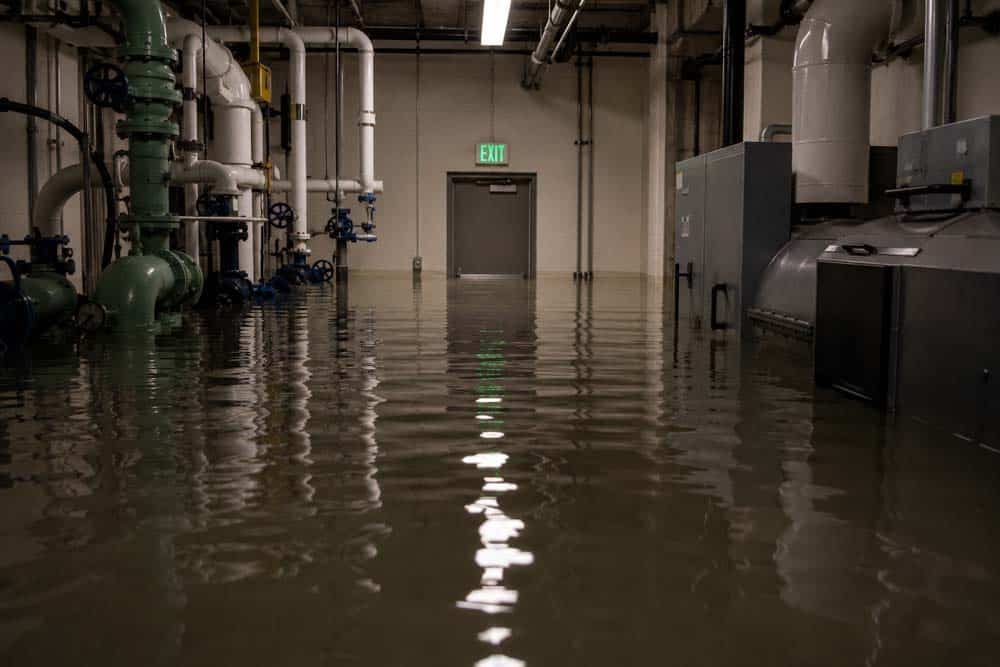
Unlike disaster recovery funding, which becomes available after a disaster, BRIC focuses on proactive investments that help protect people, infrastructure, and critical services from future hazards. Among other evaluation criteria, submissions emphasize projects that are shovel-ready and demonstrate quantifiable risk reduction through a benefit-cost analysis (BCA).
Historically, BRIC has supported projects that reduce disaster risk while lowering future recovery costs. Although future funding opportunities remain subject to Congressional appropriations and FEMA guidance, investing in mitigation continues to be recognized as one of the most effective ways to strengthen community resilience.
What Types of Projects Can BRIC Fund?
While every funding opportunity is unique, BRIC has historically supported a wide range of mitigation activities, including:
- Flood mitigation projects
- Stormwater and drainage improvements
- Culvert and bridge upgrades
- Water and wastewater system improvements
- Electric utility hardening
- Emergency power improvements
- Safe rooms and tornado shelters
- Wildfire mitigation
- Nature-based solutions
- Hazard Mitigation Planning and other planning activities, including updates to FEMA-approved Hazard Mitigation Plans
The common theme is simple: projects should reduce future disaster risk and improve a community’s ability to withstand natural hazards.
Who Can Apply?
BRIC funding is administered through states, Tribal Nations, and territories. Eligible subapplicants have historically included many types of public entities, including counties, cities, boroughs, towns, villages, public utility authorities, water and wastewater providers, public power authorities, and other eligible local governmental organizations.
Applicants should always review the current Notice of Funding Opportunity and coordinate with their State Hazard Mitigation Office for the latest eligibility requirements.
3 Ways Communities Can Prepare for the Next FEMA BRIC Funding Opportunity
Whether or not your organization ultimately applies for BRIC funding, the following activities are worthwhile investments. They strengthen resilience, improve long-term infrastructure planning, and can help position your community for a variety of future grant opportunities. Note that these are based on FY2025 application requirements, which are subject to change in future BRIC application windows. Note that anything requiring municipal approvals can be a multi-month process due to public notices, comment periods, and other requirements.
1. Participate in a FEMA-Approved Hazard Mitigation Plan
Most FEMA mitigation grant programs require applicants to be covered by a FEMA-approved Hazard Mitigation Plan. Fortunately, this does not necessarily mean developing a standalone plan. Many communities participate in county, regional, multi-jurisdictional, or state Hazard Mitigation Plans.
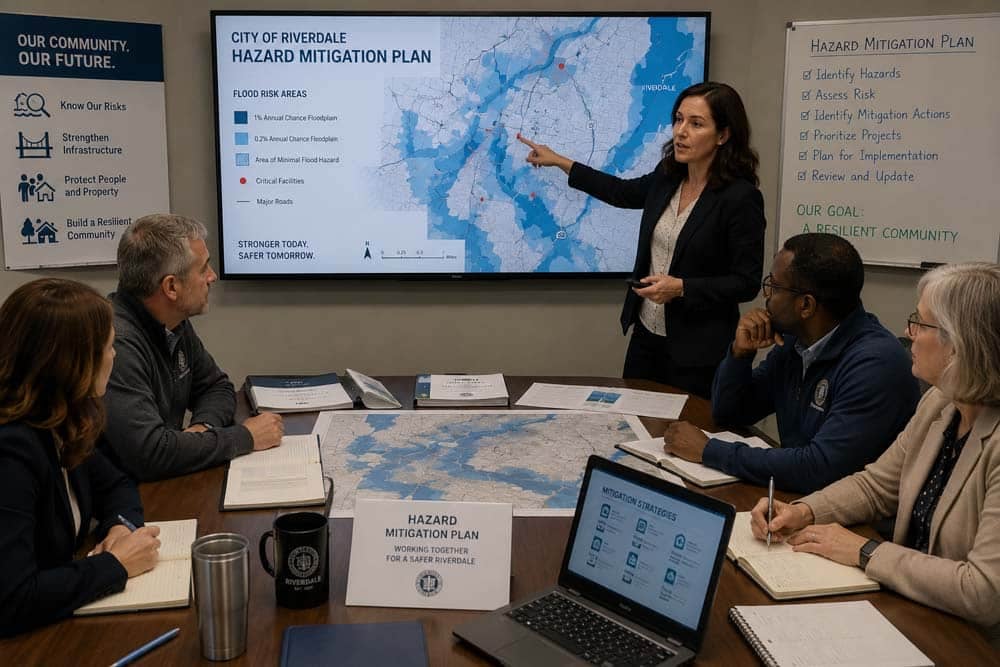
If your community is not actively participating in the planning process, or if your proposed project is not identified in the current plan, now is an excellent time to begin those conversations. Hazard Mitigation Plans are updated periodically, and incorporating future mitigation priorities today can improve readiness for future funding opportunities.
BRC also assists communities with developing and updating FEMA-compliant Hazard Mitigation Plans that support long-term resilience planning.
Hazard Mitigation Plans are updated periodically, and incorporating future mitigation priorities today can improve readiness for future funding opportunities.
*Note that entities will need to prove that their FEMA-approved mitigation plan has been formally adopted via Board vote, etc.
2. Adopt Modern Building Codes
Modern building codes are one of the most effective tools communities have for reducing future disaster losses. FEMA has consistently recognized the importance of adopting current building codes because they improve the resilience of new construction and help reduce damage from future disasters.

3. Start Engineering Early
Many successful mitigation projects begin with a well-defined understanding of the problem and a technically sound solution.
Advancing engineering before a funding opportunity opens can help communities better understand project scope, anticipated costs, constructibility, environmental and historic preservation concerns, and potential implementation challenges. Projects with more developed engineering are also generally easier to refine if future funding opportunities become available.
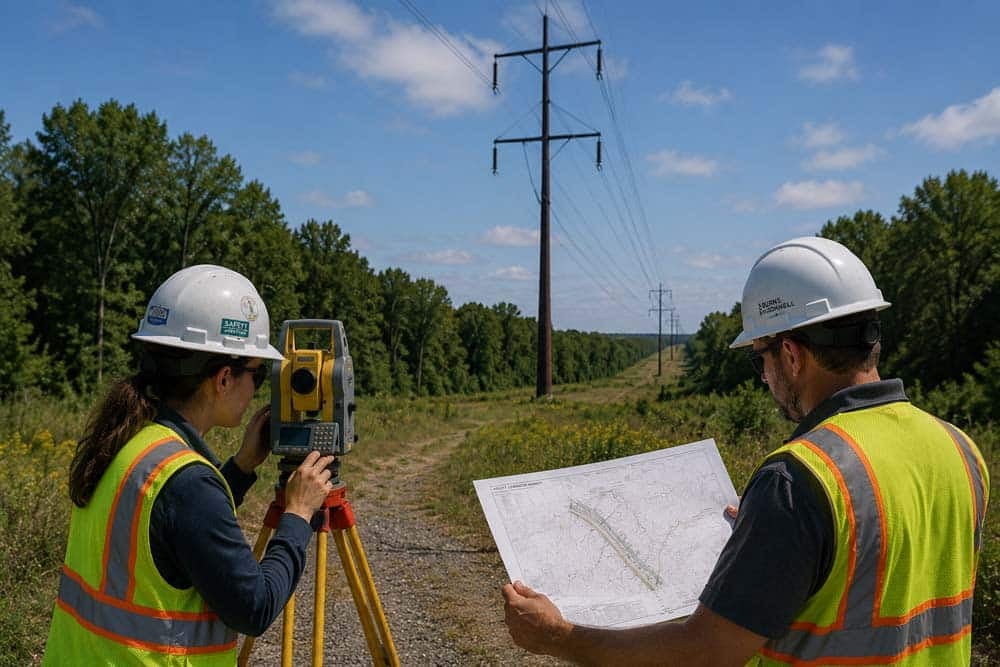
For many projects, approximately 30 percent design is a common benchmark for demonstrating project maturity, although every project is unique. The higher design completion, the more “shovel-ready” the project is considered by reviewers.
Even if BRIC funding is never pursued, engineering studies often provide valuable information that supports capital improvement planning, asset management, budgeting, and other infrastructure investments.
How Berquist Recovery Consulting Can Help
Preparing a successful mitigation project requires more than completing grant forms. It begins with identifying projects that meaningfully reduce disaster risk and developing the technical documentation needed to support them.
Berquist Recovery Consulting works with public agencies throughout the planning process, helping communities evaluate project eligibility, coordinate with engineering teams, develop Hazard Mitigation Plans, and prepare competitive FEMA mitigation grant applications, including BCA calculations.
Our experience includes projects involving public water systems, wastewater utilities, public power authorities, solid waste facilities, and local governments across the country. Whether your project is still an idea or engineering is already underway, we can help identify practical next steps and position your organization for future funding opportunities.
Frequently Asked Questions
What is BRIC?
BRIC is FEMA’s pre-disaster mitigation grant program that has historically provided funding for infrastructure projects that reduce future disaster risk.
Who can apply for BRIC?
Eligible applicants have historically included states, Tribal Nations, territories, and many types of local governmental entities, including counties, municipalities, public utility authorities, and special districts. Eligibility should always be confirmed in the current Notice of Funding Opportunity.
Does my community need its own Hazard Mitigation Plan?
Not necessarily. Many communities participate in county, regional, or multi-jurisdictional Hazard Mitigation Plans that identify and prioritize the specific natural hazard risks they are trying to address through BRIC funding, such as flooding, hurricanes, wildfires, severe storms, or other local threats. The important consideration is ensuring your community is covered by a FEMA-approved plan and that has been formally adopted.
How much engineering should be completed before applying?
Every project is different, but approximately 30 percent design is commonly viewed as a good level of project development before pursuing competitive mitigation funding.
Start Preparing Today
Preparing for future mitigation funding is not simply about being ready for the next BRIC application. It is about building stronger communities that are better prepared for future disasters.
Whether your organization ultimately pursues BRIC or another funding source, maintaining a current Hazard Mitigation Plan, adopting modern building codes, and advancing engineering are practical investments that can strengthen resilience and improve long-term infrastructure planning.
If your community is considering a future mitigation project, Berquist Recovery Consulting can help evaluate opportunities, develop a strategy, and prepare your organization for future FEMA funding opportunities.
Maintaining current emergency operations plans, updating procurement procedures, identifying mitigation opportunities, protecting critical infrastructure, and understanding FEMA requirements before disasters occur all contribute to faster recovery and stronger long-term resilience.
Preparedness is not simply about responding to emergencies—it is about reducing future risk, protecting public investments, and building stronger communities.